Human eye color is shaped not only by melanin levels but also by the unique patterns within the iris. These microscopic features create the textures, shadows, and subtle variations that make every eye uniquely recognizable. Although many people describe these patterns as “sunflower eyes,” “rings,” or “spokes,” they are simply natural anatomical structures with fascinating optical effects.
Below is a simple explanation of the most common iris patterns and what they indicate from a biological point of view — without implying any medical condition or genetic diagnosis.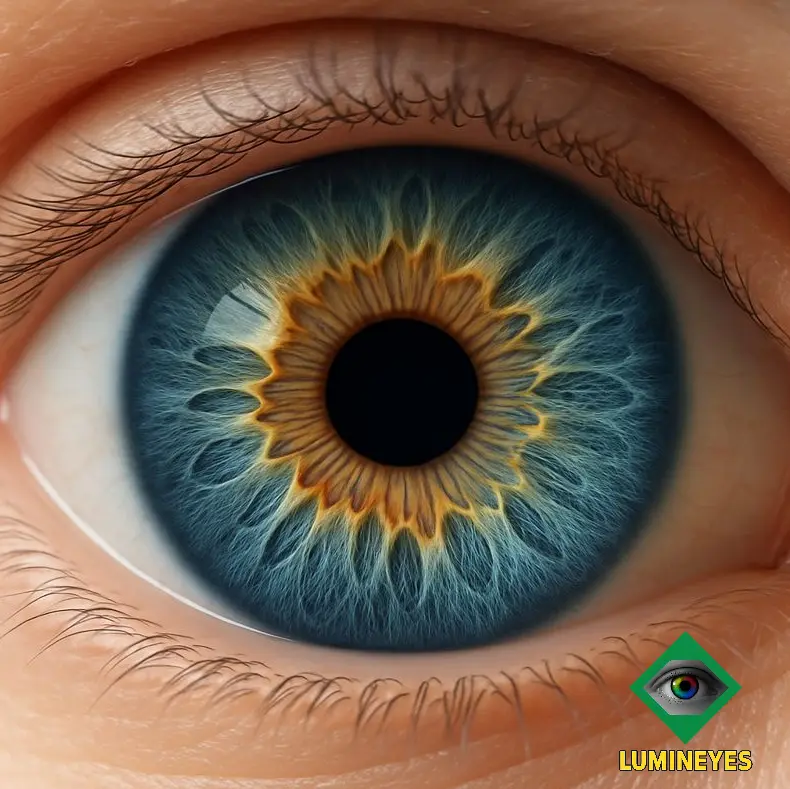
1. Iris Crypts (Furrows and Deep Grooves)
Crypts appear as small, leaf-like openings or deeper grooves in the iris surface. They are completely normal and form during early development.
What they do:
- Add depth and shadow to the iris
- Make lighter eye colors appear more textured
- Increase the 3D effect when light catches the surface
People often associate crypts with eyes that look “detailed” or “multidimensional” in photos.
2. Contraction Rings (Circular Rings Around the Pupil)
These thin circular lines appear when the iris muscles contract and relax throughout life. They can be faint or very pronounced.
Why they form:
- Natural movement of the pupil
- Structural elasticity of the iris stroma
- Differences in collagen fiber density
Contraction rings can make the eyes look more defined, especially in hazel, green, and blue eyes.
3. Radial Streaks or “Radiations”
These appear as thin lines extending outward from the pupil, resembling spokes of a wheel.
What creates them:
- Collagen fiber arrangement in the anterior stroma
- Variations in the way light scatters across those fibers
Radial streaks often give the iris a “starburst” appearance, especially in lighter eye colors.
4. Pigment Freckles and Natural Speckles
Small dots or tiny darker areas on the iris surface are normal and common. They are usually stable throughout life.
Optical effect:
- Add “warmth” or “coolness” depending on tone
- Influence how hazel or green eyes appear in sunlight
- Create subtle asymmetry, which increases eye individuality
5. Limbal Ring (Dark Outer Border)
The limbal ring is the dark circle where the iris meets the sclera. Its prominence varies naturally.
What it affects:
- Strong limbal ring → sharper contrast, youthful appearance
- Faint limbal ring → softer transitions and more subtle eye texture
It is purely structural, not functional, and changes slightly with age.
How These Patterns Affect Perceived Eye Color
Although none of these patterns change melanin levels, they strongly influence the appearance of color:
- More crypts → deeper, more textured eyes
- Strong contraction rings → higher contrast
- Radial streaks → brighter or more “dynamic” appearance
- Pigment freckles → warmer undertones
- Pronounced limbal ring → sharper iris boundary
This explains why two people with similar melanin levels can still have noticeably different-looking eye colors.
For a Full Scientific Overview of Eye Color Structure
If you want a broader explanation of melanin distribution, stroma density, and how light scattering creates every natural eye color, you can explore the full Eye Color Chart & Genetics guide:
👉 https://mylumineyes.com/eye-color-chart-genetics-genes/
(This is the only recommended reference page, as it provides a complete scientific framework without discussing procedures or treatments.)